
Cities are responsible for 75% of global energy consumption and 80% of all greenhouse gas emissions – if you include energy in construction and demolition, cooking, heat, lighting inside buildings and cooling, people commuting, freight deliveries, water supplies, street lights and so on.
Most people in the world today live in cities, and most large cities have major problems with pollution – air, water, noise, dumping of rubbish, sewage.
300 million will move from rural areas to cities by 2020 in China alone, plus a further 400 million people across Africa. We will soon have 100 megacities, each with more than 15 million inhabitants.
Most people in megacities live in slum dwellings: shacks which start off made from bits of wood, cardboard and plastic sheeting. Soon you see one or two or three storey buildings begin to rise up, squashed against each other, fighting for space and light. Electricity soon arrives – maybe a twist of wire from a streetlight.
When mains water arrives, new troubles begin. With no drains, it may only be days before slum areas are sliced by networks of shallow, narrow ditches filled with dirty water from washing, cleaning, leaking pipes and sewage - plus rotting rubbish.
From low carbon to zero emission cities
Cities need formal planning and that requires visionary leadership. Take Wuhan for example, as a typical, rapidly growing megacity of 10 million people: the largest in Central China.
The local government has a 20 year plan for expansion, is building new high density suburbs for 7 million more people, on industrial wastelands surrounding the city, as well as new railway stations and other infrastructure. In 2005 only 50% of waste water was treated, now it is 80%.
What about carbon-neutral cities? The government of Abu Dhabi is creating an eco-city called Mazdar, over an area of 6.5 square kilometres, for 40,000 inhabitants and 70,000 workers. It is being built in desert and will cost Abu Dhabi $22 billion, but they hope Mazdar will boost the economy by 2%.
Buildings will be covered in solar panels, and people will travel in electric robot-driven vehicles. Two thirds of the energy used will be from solar, and all water will be recycled.
New cars, buses, trucks and trains will transform city life, but most city energy is burnt up in buildings, and things like lighting the streets.
Here are some easy ways to save huge emissions at low or zero cost.
Just 9 simple steps can reduce energy consumption in many cities by at least 30%, using technologies or methods that are already proven, and which will mostly pay for themselves: low energy street lights, making buildings last longer, use of polymer concrete, better insulation, heat pumps, better boilers, combined heat and power, better heating controls, roof gardens and better city design.
Adapted from book SustainAgility - read more / videos.
Articles and Videos on Global Warming
Here are more resources on this site that you may find helpful.
True Cost of Global Warming
How business will help solve global warming with green technology
CARBON DIET to save the World
Global Warming - Science Summary
Future of Oil Prices: Middle East, global economy
Roof Gardens Impact on Energy Saving
Biofuels Controversy and Climate Change
Iceland Volcano Eruption - Geothermal Power Potential
Energy Use Consulting - Boom Industry
Smart Power Regulation - Energy Saving
Green Technology Innovation Awards Chaired by Patrick Dixon
Product Exchanges and Climate Change
Wind Turbines and Global Warming
Solar Cell Roofing and Climate Change
Low Energy Streetlights and Global Warming
Polymer Cement - to save 2% global CO2
Carbon Capture - Climate Change Business
Future of Oil Industry when will oil run out? Kuwait and region
Heat Pumps - to prevent global warming
Cost of global warming - practical answers
The $40 trillion climate change business
Impact of Global Warming on Human Life
The Future of the Environment
Green Technologies innovation will help with climate change
Sustainability, climate change and crazy biofuels policy
Sustainagility: innovation will help save world. Sustainable business future
Sustainable business: $40 trillion green tech boom will help save world
How Green IT saves money and energy, improves image and environment - keynote
Water Wars Risk? Futurist Q&A with Patrick Dixon
Global Warming: green technology will help world
Economic Growth Limits? Sustainability. FUTURIST Q&A
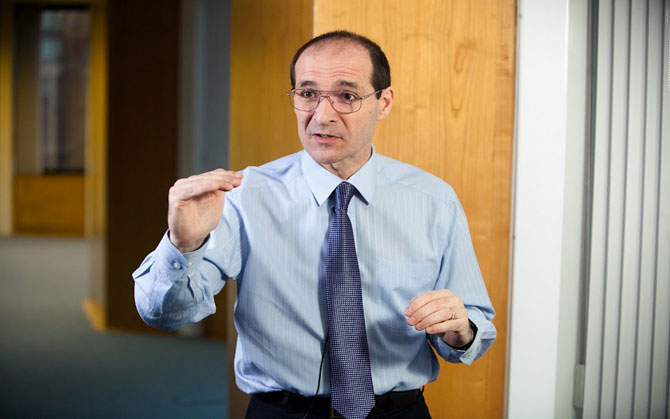
Futurist keynote speaker and author of 19 books. Thirty years forecasting global trends for more than 400 clients, in every industry.
Join the debate
0 commentsWhat are your own views? Comments are moderated before they appear.