
Patrick Dixon is a global keynote speaker on future retail and AI, author of 19 books
NEW AI BOOK IN BESTSELLER LIST FOR 12 MONTHs IN AIRPORTS GLOBALLY - WH SMITHS
MANY OF MY GLOBAL CLIENTS are food and beverages retailers (F&B), or they manufacture Fast Moving Consumer Goods (FMCG) retail products that sell globally, and these are sectors that are changing very rapidly but not always as people expect.
AI will be vital to the future of grocery retail, food and beverages - what we eat and drink. Take total online retail sales, (including Fast Moving Consumer Goods - FMCG) which have reached 22% of retail globally. This figure for home-food ordering leapt during COVID but will not leap forward as much again because there is a natural limit here – physical retail will always play an important role in every society. This is especially true for food, less so for beverages, because consumers often like to see, feel, smell the food they buy, and there are often wider ranges of package size in store compared to online.
The UK is one of the world’s most advanced online economies: online food, beverage and grocery sales shot up during the pandemic as part of the jump in total retail sales from 20% to 37%, then (as I predicted) total online retail dropped back again, to 32%, which is probably close to where it will be for the longer term – significantly less than 50%.
By 2030, 90% of all customer interactions with larger companies (including food and beverage retail companies) will be AI-driven, referring on to humans only as needed. But it will be easy to alienate food and beverage customers with poorly designed AI, especially with long delays to speak to a real person when AI can’t help.
Read on - buy my new book NOW --- ---- "How AI Will Change Your Life".
AI impact on food and beverage sales - $10 trillion a year
Of all retail sales across the EU, 70% are captured by just eight companies and all depend on AI to predict local demand for every item. As a result, product ranges vary a lot from one area to another, in the same retail chain.
Emotion and lifetime familiarity will continue to play a major part in food sales - just think of how enduring many food brands are, with consumer loyalty passed down from generation to generation.
So food shopping will in some ways remain a conservative business compared to many other sectors. Well known and much loved, strongly trusted food brands will continue to do well, so long as quality is maintained and the products are totally unchanged in formulation.
How AI will help food production and distribution globally
The global food market is worth $10tn a year, and will grow rapidly. It needs to. More than 800 million people across the world are often hungry, while 1 billion are now considered obese. By 2050 the number of people who are obese will rise to 2 billion, and half a billion people will probably still be hungry. So how will AI help us provide enough food for tomorrow’s world?
There is no doubt that AI will help many farmers grow more food, using smaller teams. Agriculture in countries like the UK, France, US and Canada is already highly industrialised, with ever larger landholdings and food output. The latest agricultural machines are so complex and expensive that many individual farms now rent them by the day.
Farmers are totally dependent on the right amounts of sun and rain each month. More accurate long-range weather forecasts using AI will mean farmers improve their food harvest yields – advised by AI when best to plant, spray, weed, fertilise and harvest. AI will help farmers work out how best to maintain their soil with improved diagnostics. Videos by drones will be used by AI for ‘precision agriculture’: earlier diagnosis of damaged crops, weed infestations and possible disease.
AI will also keep a closer eye on cattle, using cameras in farmyard areas and milking parlours, to detect health issues earlier. AI will drive tractors, potato harvesters, fruit pickers. In Shropshire, Harper Adams University is using AI to diagnose ill health and other issues in cattle. They use cameras in sheds to recognise individual cows, and to log behaviour, what they eat and the milk produced.
However, using AI like this requires internet access across farmland. One fifth of US households are not online, while 77% experience slow download speeds on smartphones. More than 60% of farmers in Africa are completely offline.
Daily Telegraph review (14 September UK):
"If you need to acquire instant AI mastery in time for your next board meeting, Dixon’s your man.
Dixon gives us plenty to think about: AI’s role in surveillance; AI’s role in intellectual freedom and copyright; AI’s role in warfare; AI’s role in human obsolescence – his exhaustive list runs to over two dozen chapters.
Business types will enjoy Dixon's meticulous lists and his willingness to argue both sides against the middle."
Looking for a world-class keynote speaker on AI in Food and Beverages (F&B) industry? Call +44 7768 511390
* Dr Patrick Dixon is one of the world's best known keynote speakers on global trends, often described as Europe’s leading Futurist. Author of 19 books, he has advised over 400 of the world’s largest corporations, often sharing platforms with their CEOs at their most important global events. His clients include Google, Microsoft, IBM, Intel, LinkedIn and many of the world’s largest manufacturers as well as governments. Patrick is a cancer physician by first training and his first start-up company some decades years ago was an AI-simulator, using computers to talk to and diagnose patients. His website globalchange.com has had 15 million unique visitors with 9 million video views.
How AI will change your life - Contents of BookChapter Headings:
Part One: How AI Is Evolving
1 The Truth About Artificial Intelligence
2 Super-Smart AI and a Reality Check
Part Two: How AI Will Shape Our Future World
3 Workplace AI
4 Office Workers - impact of AI
5 Healthcare - how AI will drive better health
6 Pharma, Disease Prevention and Wellness - how AI will transform pharma
7 Education – in School and at College - AI challenges to education
8 Adult Education and ‘Truth’ - why AI will redefine "Truth"
9 Software Development - AI will help but less than many think
10 Film-making and Music - get ready for AI revolution
11 Search Engines, Social Media, Publishing and Art - massive AI impact
12 Marketing - most campaigns will be driven entirely by AI
13 Retail - AI will have huge impact on retail eg food and beverages (F&B) and fast moving consumer goods (FMCG)
14 Travel and Leisure - multiple impacts of AI on airlines, auto industry etc
15 Relationships - relationships with AI bots, and impact of AI on human to human relationships
16 Food Industry - AI will drive greater efficiency
17 Satellites and Space Colonies - impossible without AI
18 Manufacturing, Logistics and Supply Chains - major benefits from AI
19 Construction and Cities - AI will transform construction and the built environment
20 Environment - AI will consume huge amounts of power but also enable sustainability initiatives
21 Pensions and Wealth Management - AI already controls most investment decisions
22 Corporate and Retail Banking, and Insurance - AI poses major threats but will deliver cost savings
23 Cybersecurity - greatest risk from AI right now
24 Surveillance - AI is every dictator's dream tech
25 Military and War - get ready for AI driven wars
26 Government - AI will enhance government and threaten democracy
Part Three: How Should We Respond?
27 Ten Steps for Governments
28 Twelve Steps for Individuals
29 Ten Steps for Companies
30 Postscript – A Story
Read on - buy my new book NOW. "How AI Will Change Your Life."
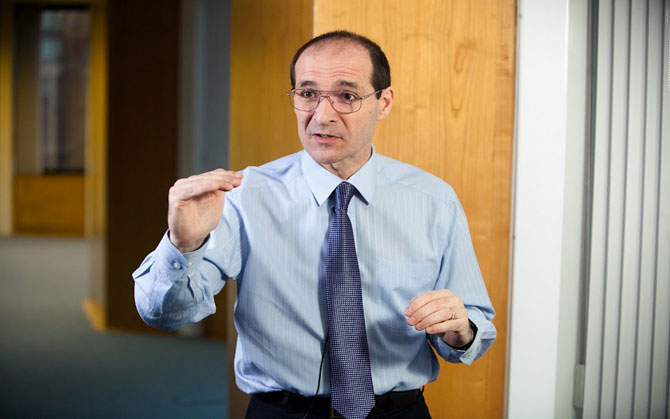
Futurist keynote speaker and author of 19 books. Thirty years forecasting global trends for more than 400 clients, in every industry.
Join the debate
0 commentsWhat are your own views? Comments are moderated before they appear.