
Patrick Dixon is a global keynote speaker on future banking and AI, author of 19 books
NEW AI BOOK IN BESTSELLER LIST FOR 12 MONTHs IN AIRPORTS GLOBALLY - WH SMITHS
AI SPENDING BY BANKS is growing by 30% a year and is likely to reach $100bn by 2027, mainly in North America. Last year, banks in the US and Canada were responsible for 80% of published research on AI and funded 60% of all banking investments in AI globally. While most of this is about saving on costs, as we will see, the greatest risk to banks will be AI-driven cyberattacks.
The banking sector as a whole is already in trouble. Indeed, it never recovered its full strength after the 2008–2009 banking crisis. A report by McKinsey shows that 75% of banks are delivering very low returns on capital for investors, not even covering the costs of providing that capital.
One reason is much tougher regulation, which hit profits by requiring banks to tie up more capital in reserves and be more cautious. But if you don’t allow decent financial returns on investment in a particular sector, then the market will tend to dump those shares in preference for something ‘safer’. And this is what has happened: banks are now struggling to attract strong investor interest – compared to ‘more exciting’ AI-related companies for example. But our world needs strongly capitalised banks. Banks are as fundamental to the future of every country as hospitals and schools.
Into this gap is rushing a great number of new types of banks or lending agencies such as retail chains, plus new payment mechanisms on social media platforms such as Weibo, Facebook, Snapchat and TikTok. Traditional banks are also finding that some FinTech companies are taking away their own customer relationships, as they grow a wide range of services for banks. Customers increasingly expect decisions at the speed of light, influenced by the digital world, and FinTech is enabling banks to buy in that kind of technology rapidly at relatively low cost.
In banking, 85% of IT executives have a clear strategy for adopting AI, while 80% of senior bankers are certain that AI will make all the difference between being a winner or a loser. But at the same time, most are worried about AI risks. AI will rapidly reduce core banking costs
In theory, AI should allow five times the volume of transactions to be handled by same-sized banking teams, allowing major costcutting. In practice, large-scale AI projects in banks carry all the usual risks of any other IT transformation – as we have seen in Chapter 9.
Daily Telegraph review (14 September UK):
"If you need to acquire instant AI mastery in time for your next board meeting, Dixon’s your man.
Dixon gives us plenty to think about: AI’s role in surveillance; AI’s role in intellectual freedom and copyright; AI’s role in warfare; AI’s role in human obsolescence – his exhaustive list runs to over two dozen chapters.
Business types will enjoy Dixon's meticulous lists and his willingness to argue both sides against the middle."
Read on - buy BESTSELLER LIST book NOW. How AI Will Change Your Life
Looking for a world-class keynote speaker on Banking and AI? Call +44 7768511390
* Dr Patrick Dixon is one of the world's best known keynote speakers on global trends, often described as Europe’s leading Futurist. Author of 19 books, he has advised over 400 of the world’s largest corporations, often sharing platforms with their CEOs at their most important global events. His clients include Google, Microsoft, IBM, Intel, LinkedIn and many of the world’s largest manufacturers as well as governments. Patrick is a cancer physician by first training and his first start-up company some decades years ago was an AI-simulator, using computers to talk to and diagnose patients. His website globalchange.com has had 15 million unique visitors with 9 million video views.
How AI will change your life - Contents of BookChapter Headings:
Part One: How AI Is Evolving
1 The Truth About Artificial Intelligence
2 Super-Smart AI and a Reality Check
Part Two: How AI Will Shape Our Future World
3 Workplace AI
4 Office Workers - impact of AI
5 Healthcare - how AI will drive better health
6 Pharma, Disease Prevention and Wellness - how AI will transform pharma
7 Education – in School and at College - AI challenges to education
8 Adult Education and ‘Truth’ - why AI will redefine "Truth"
9 Software Development - AI will help but less than many think
10 Film-making and Music - get ready for AI revolution
11 Search Engines, Social Media, Publishing and Art - massive AI impact
12 Marketing - most campaigns will be driven entirely by AI
13 Retail - AI will have huge impact on retail eg fashion
14 Travel and Leisure - multiple impacts of AI on airlines, auto industry etc
15 Relationships - relationships with AI bots, and impact of AI on human to human relationships
16 Food Industry - AI will drive greater efficiency
17 Satellites and Space Colonies - impossible without AI
18 Manufacturing, Logistics and Supply Chains - major benefits from AI
19 Construction and Cities - AI will transform construction and the built environment
20 Environment - AI will consume huge amounts of power but also enable sustainability initiatives
21 Pensions and Wealth Management - AI already controls most investment decisions
22 Corporate and Retail Banking, and Insurance - AI poses major threats but will deliver cost savings
23 Cybersecurity - greatest risk from AI right now
24 Surveillance - AI is every dictator's dream tech
25 Military and War - get ready for AI driven wars
26 Government - AI will enhance government and threaten democracy
Part Three: How Should We Respond?
27 Ten Steps for Governments
28 Twelve Steps for Individuals
29 Ten Steps for Companies
30 Postscript – A Story
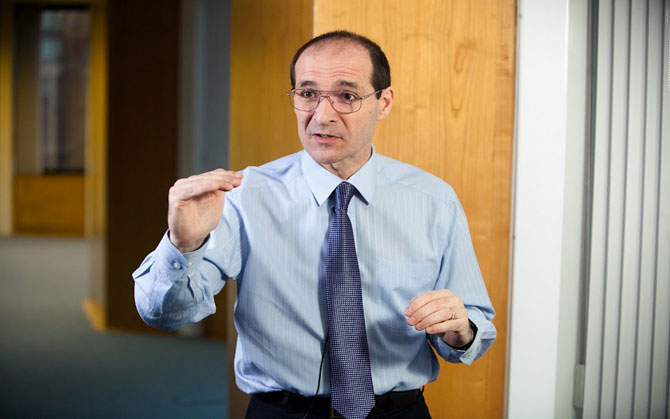
Futurist keynote speaker and author of 19 books. Thirty years forecasting global trends for more than 400 clients, in every industry.
Join the debate
0 commentsWhat are your own views? Comments are moderated before they appear.