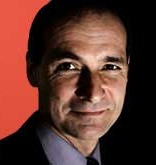
Keynote on risk management to 4500 executives in Las Vegas - recorded before COVID
Future of risk management in banks - urgent steps that every bank needs to take to reduce risks while still remaining agile and able to innovate in the face of new threats such as AI. Artificial Intelligence is creating massive new vulnerabilities in every bank's security. 36,000 reads of this Article - includes Video comment and clips from keynote on risk management for clients of Wolters Kluwer.
Summary: Banks face multiple, highly complex risks in a world that is changing faster than you can call a board meeting. Some of these banking risks are preventing innovation - for example paralysis which often happens for several years after a merger, while legacy IT systems are made to work together, for example AI reinventing entire banking processes in 6 months. Others are working against customer interests - slowing down services or preventing access altogether. Some risks such as cyberattack are likely to grow very rapidly over the next decade, powered by criminal abuse of Artificial Intelligence engines to hack even the most secure global banking systems.
* "How AI Will Change Your Life - A Futurist's Guide to a Super-Smart World" - Patrick Dixon's latest book on AI is published in September 2024 by Profile Books. It contains 38 chapters on the impact of AI across different industries, government and our wider world, including the impact of AI on risk management in banking and other industries.
Need a world-class banking keynote speaker? Phone Patrick Dixon now or email.
Reducing risk in banking
Video comment and clips from keynote on risk management for clients of Wolters Kluwer. Future of risk management in banks - urgent steps that every bank needs to take to reduce risks while still remaining agile and able to innovate.
Over the years I have lectured to hundreds of risk managers in the banking industry. The boards of most banks are only partially aware of the total risks they are exposed to. Just look at the spiraling complexities of cyberattacks alone. Many CEOs have been shocked by private warnings recently from Secret Services about what is about to hit them.
Just today, I learned of yet another example of how easy it is for CEOs of banks to be insulated from technology risks, to be unaware of highly destructive, ticking time bombs: low probability but potentially very devastating events that could go off at any time.
Risk managers who cannot manage banking risk
I remember before the sub-prime crisis giving a keynote on banking risks – in which I identified correctly a number of worrying areas that I thought likely to blow up in future. Afterwards a number of the audience came to talk with me. They said that they agreed with what I was saying but as risk managers they were almost powerless to do anything about it. If the bank took a very different view on a particular risk than the rest of the industry, they would end up walking away from an area that was profitable at the moment and would be criticized by analysts for being too cautious.
Benchmarking is highly toxic to risk management
That is why benchmarking is so toxic to risk management – when risk managers benchmark their own bank against actions by competitors in the same industry, the end result can be an entire industry walking blindly over the same cliff. This is of course exactly what happened in steps that led to the sub-prime crisis.
Risk management requires having courage to stand for what you believe is a right view of risk, not being swayed by a general industry view.
Risks changing faster than you can hold a board meeting
Risk management is now so complex in banking and payments that it is almost impossible for even the largest players to work on their own without partnerships and collaboration. Our world is changing faster than you can hold a board meeting, and risks evolve at the speed of light. That is why you are going to hear a lot more about agile strategy, agile leadership, agile decision-making and a more dynamic and resilient approach to risk management.
Institutional blindness - Big Data, Internet of Things and the Cloud
The biggest risk in any bank is institutional blindness: and the best antidote is for risk managers to have a very broad view of life, constantly reviewing the wider operating environment, and related industries.
For example, when you add Mobile Payments to the Internet of Things to Big Data, and put all that in the Cloud, you land up with a mega target for every hacker in the world – whether criminals or people acting for a foreign state power. So expect to see astonishing levels of investment to keep these things secure, and some very worrying headlines to come about mass attacks.
Managing risks from innovation in banking
And a further challenge is to manage risks while also encouraging innovation, which by definition introduces change, new systems and processes, new uncertainties and a range of new (and often poorly understood) risks. That is why so many banks are innovating on the peripheries of their core businesses, or in smaller semi-independent entities which are used as test-beds for new products, services, supporting structures and novel IT systems.
Risks from rogue employees
One of the greatest challenges to risk management in banks continues to be rogue employees who act in ways that may just about be compliant with letter of regulations, or may violate the spirit of them, or may flout them completely, either acting alone or in collusion with many others. As we have seen recently in a whole stack of banking scandals, the scale of compensation can dwarf the huge fines. Take the rigging of Libor for example. It will probably take at least a decade for all the civil court cases to come to trial for compensation – and the sums involved could end up possibly even higher than those in multiple class-action lawsuits against the tobacco industry.
There will always be rogues who get hired, but banks can reduce the risk by changing the working culture, tightening supervision, using stronger IT monitoring systems, and selecting different kinds of people. Several companies now offer highly sophisticated Big Data analysis that looks for a vast range of unusual patterns – for example timings of unusual phone calls, or emails, that seem statistically related to unusual trading patterns and so on.
Need a world-class risk management keynote speaker? Phone Patrick Dixon now or email.
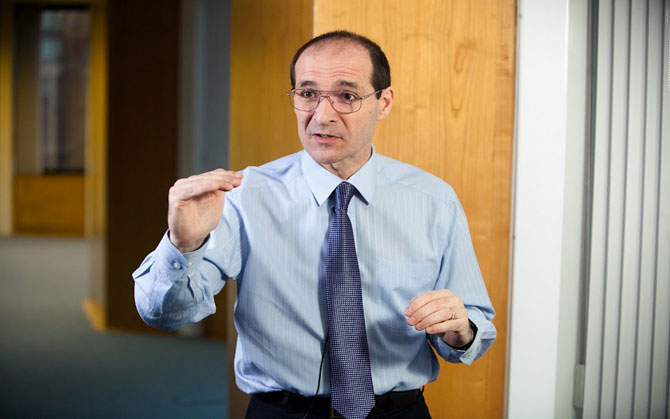
Futurist keynote speaker and author of 19 books. Thirty years forecasting global trends for more than 400 clients, in every industry.
Join the debate
0 commentsWhat are your own views? Comments are moderated before they appear.