- Home
- YOUR FUTURE
- AI / Artificial Intelligence, Cybersecurity and Robotics
- Future of Marketing and AI Keynotes
- Future of Retail / Food / Drink
- Future Banking / FinTech / Investment / AI security
- Future of Insurance, AI and Risk Management
- Global Economic Trends, Globalisation, Tariffs, Risk
- Future of Travel incl AI / Transport / Cars / Trucks / Aviation / Rail
- Future of Manufacturing 5.0, AI Manufacturing keynote speaker
- Future Logistics Keynotes / Supply Chain Risks and AI
- Future Media / AI, Films, Music, TV, Radio, Print
- Future Green Tech / Sustainabilty and AI
- Future Energy / Petrochemicals / AI
- Future Construction, Smart Cities, Infrastructure AI
- Future Law and Accountancy, incl AI
- Futurist Keynotes
- FUTURE EVENTS
- How Patrick Dixon will transform your event as a Futurist speaker
- How world-class Conference Speakers always change lives
- Keynote Speaker: 20 tests before booking ANY keynote speaker
- How to Deliver World Class Virtual Events and Keynotes
- 50 reasons for Patrick Dixon to give a Futurist Keynote at your event
- Futurist Keynote Speaker - what is a Futurist? How do they work?
- Keys to Accurate Forecasting - Futurist Keynote Speaker with 30 year track record
- Reserve / protect date for your event / keynote booking today
- Technical setup for Futurist Keynotes / Lectures / Your Event
- Dr Patrick Dixon MBE
- Futurist Books
- 18 books by Futurist P Dixon
- How AI Will Change Your Life
- The Future of Almost Everything
- SustainAgility - Green Tech
- Building a Better Business
- Futurewise - Futurist MegaTrends
- Genetic Revolution - BioTech
- The Truth about Westminster
- The Truth about Drugs
- The Truth about AIDS
- Island of Bolay - BioTech novel
- The Rising Price of Love
- Clients
- CONTACT for KEYNOTES

Patrick Dixon - Futurist Keynote Speaker "How AI Will Change Your Life" - BESTSELLER IN AIRPORTS FOR 12 MONTHS
30 Year Track Record in Forecasting >400 Global Clients - Every Industry
Future of Infrastructure - huge impact of AI on business case, specifications, design, implementation, construction, quality control, maintenance - keynote in Bogota
95% of surgical operations will use robots by 2035. 30m procedures already globally. Already 10% of all ops in nations like UK are robot-assisted. Health Care and AI Keynote Speaker
Rogue AI will destroy many large companies and threaten governments. Cybercrime already costs $8tn a year. Criminal gangs and hostile governments are already hijacking AI - often working together in hybrid war strategies. Cybersecurity keynote.
How AI will impact future of the Construction Industry: AI building design, AI in structural engineering, AI bids, AI quality control etc. Use AI to reduce costs and manage risks. AI construction keynote
How AI is transforming Pharma and health care. 10m lives a year will be saved. Major AI impact on diagnostics, imaging, AI in treatment decisions, AI robotic surgery, smarter drug discovery and development (AI pharma). Keynote on health
Leading in chaotic times: Seize opportunity with cash, agility and trust. Logistics Keynote
The TRUTH about the FUTURE including AI - all major trends are VERY closely interlinked. Why so many major errors have been made in forecasting AI impact with billions wasted - AI keynote
Connect your brain into AI? Many Gen Z would like to do so. A growing number of people have brains already linked to AI-chips - embedded inside their heads. Would you like this? Keynote speaker on AI and why emotion, passion and purpose really matter
THIS IS OUR FUTURE: 1bn children growing up fast, 85% in emerging markets. Futurist Keynote Speaker on global trends, advisor to over 400 of the world's largest corporations, often sharing platform with their CEOs at their most important global events
AI impact on pharma, medtech, biotech, health care innovation. Why AI will save 10m lives a year by 2035. Dr Patrick Dixon is a Physician and a Global Futurist Keynote Speaker, working with many of the world's largest health / AI companies
Most board debates about FUTURE are about TIMING, not events. That's because global companies are CREATING the future in their own industries - innovation, often linked to AI. But being too early or too late can be fatal. Futurist Strategy Keynote speaker
Future of Logistics - Logistics World Mexico City - keynote on logistics and supply chain management
Truth about AI and Sustainability - huge positive impact of AI on ESG UN goals, but huge amounts of energy being consumed by AI. Expect AI to drive better health, education, energy saving in manufacturing, better power grids, smarter forestry monitoring,
AI will help a sustainable future - despite massive energy and water consumption. AI Keynote speaker
The TRUTH about AI. How AI will change your life - new AI book. BESTSELLER LIST AIRPORTS GLOBALLY - WH SMITHS FOR 12 MONTHs, beyond all the hype. Practical Guide by Futurist Keynote Speaker Patrick Dixon
How AI Will Change Your Life: author, AI keynote speaker Patrick Dixon, Heathrow Airport WH Smiths - has been in SMITHS BESTSELLER LIST FOR 12 MONTHs IN AIRPORTS AROUND WORLD
How AI will change your life - a Futurist's Guide to a Super-Smart World - Patrick Dixon - BESTSELLER 12 MONTHs. Global Keynote Speaker AI, Author 18 BOOKS, Europe's Leading Futurist, 28 year track record advising large multinationals. CALL +447768511390
How AI Will Change Your Life - A Futurist's Guide to a Super-Smart World - Patrick Dixon signs books and talks about key messages - future of AI, how AI will change us all, how to respond to AI in business, personal life, government. BESTSELLER BOOK
Future of Sales and Marketing in 2030: physical audience of 800 + 300 virtual at hybrid event. Digital marketing / AI, location marketing. How to create MAGIC in new marketing campaigns. Future of Marketing Keynote Speaker
TRUST is the most important thing you sell. Even more TRUE for every business because of AI. How to BUILD TRUST, win market share, retain contracts, gain customers. Future logistics and supply chain management. Futurist Keynote Speaker
Doctors playing God - the truth about future health care rationing and why every nation will ration health spending - future health care keynote speaker
Futurist Keynote Speaker: Posts, Slides, Videos - Future Health Care and Pharma Keynote Speaker
The near hysterical reaction to calls for health rationing is not because people are interested in the health of the nation but because they are afraid of their own future, afraid of diseases such as cancer and afraid of old age. Who will be there to care for me when I am dying and alone?
Rationing has always been with us. I remember my first year as a house doctor, straight out of leaving medical school. One of my patients was a man dying of kidney failure. We only had a limited number of places on the dialysis programme. He was never offered the treatment because he was "too old and not intelligent enough". But how to you decide? One doctor commented that anyone who could start the last war in the army as a private, and still be a private at the end with so many losses, was clearly someone with limited abilities, who would be unlikely to be able to manage dialysis machinery at home and would "do badly".
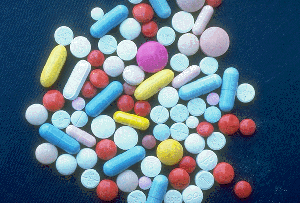 I would not seek to justify his logic, but some kind of rationing is essential in any free system and to argue otherwise is foolish. All free offers of things worth having tend to be oversubscribed - which means that supplies run out, and then many people get nothing. The answer is to manage supply and demand. True, we could always boost taxation, until each of us is spending up to a third of all we earn, paying our health insurance premiums to the government in return for unlimited NHS treatment. However few people would chose to do that. But even if the health spending in Britain was trebled, there would still not be enough resources to meet every wish. For example, if there was unlimited access to counselling or psychotherapists or cosmetic surgeons or to infertility clinics.
So then, if it is true that whatever is free tends to be undervalued and abused, then demand has to be limited in some way, either by restricting supply on a priority basis, or by making life difficult for people wanting more care. Both these systems are operating. Doctors are vetting cases before treatment, especially in fund-holding practices and in specialities such as neurosurgery, and people are made to wait.
Waiting lists are the oldest and most subtle rationing device. It starts to operate the moment you crawl out of bed in the morning with a blinding headache and decide not to bother the doctor because it will take twenty minutes to get through the switchboard, and then half an hour to get dressed, park and walk in, and then another half an hour to an hour to be seen - if they will see you today at all.
How scientists will slow down or stop ageing in humans - Video
Comment by Dr Patrick Dixon on science of ageing, implications for rationing in health care, life expectancy, medical advances, pensions, retirement, lifestyles.
The waiting continues when your doctor writes to the hospital requesting an appointment. By the time the date is confirmed, many people feel better. The crisis is over and the thought of more time off work or more favours begged from friends for childcare is too daunting. And so it goes on. At every stage people melt away. Only a few make it to the clinic, and then land up on another waiting list for treatment.
However the latest revolution in the NHS has produced trusts which are now taking the opposite line: in the past they had no incentive to work hard, and indeed welcome the waiting list system. Now many are vying with each other for patients, and we are all bombarded with a subtle advertising campaign from the moment we enter a hospital site.
There has been a dramatic change in psychology. Clinics no longer keep people waiting. Casualty departments pride themselves on rapid case assessment. More people means more money - but from the same pot. This new welcoming face in hospital care has meant that GPs are now being pushed to make decisions themselves about rationing.
So what is the answer? The situation is made ever more difficult by astounding advances in medical technology, some of which save money, but most simply gobble up resources faster than ever. Once a treatment is available (and free) the pressures become almost irresistible to use is, especially where it is a matter of "life and death", or where children are involved. The slimmest hopes of cure drive doctors and patients alike to ever more exotic approaches. But high-tech medicine is often medicine gone stark raving mad, where those who are ill become dwarfed by tubes, wires and machines in a desperate fight against the inevitable in a culture that seems to see all death as failure.
Rationing has always been with us, and should continue to be. The only alternative is an arbitrary "first come, first served" handout of care packages that will leave the less articulate and most vulnerable at terrible risk of receiving nothing at all. Health care needs managing, and we will all be healthier for it.
| < Prev | Next > |
|---|
Newer news items:
- The Rising Toll of Aids
- AIDS treatment - HIV protease inhibitors - not a cure
- AIDS Update - latest figures and AIDS video
- Aids Toll Accumulates
- ACET International Alliance - Future of AIDS - History of ACET - international AIDS agency started in 1988 by Dr Patrick Dixon, programmes in many of the poorest nations
- AIDS: Don't Die of Confusion
- Anthrax
- AIDS in Africa
- IVF latest news - summary of 100,000 publications
- The Truth about Zantac
- The Truth about Ranitidine
- The Truth about Cimetidine
- Warfarin - truth about Warfarin use. Is Warfarin safe?
- Living Wills - letter to my doctor just in case... Why it is so important to write down how you would like to be treated when too sick to be able to communicate. Future Health
- Air ambulance emergency - eye-witness account of what really happens in the sky. Why helicopter air ambulances are really important in emergency rescue, with many day to day challenges
Older news items:
- Euthanasia - when people want to die, how should doctors respond - and role of the law courts in deciding. Why I have always been completely against legalisation of euthanasia. Dr Patrick Dixon is a physician with Hospice experience, and global Futurist
- Drugs and alcohol - The Truth
- Drug addiction and treatment - Useful Links
- 6 steps to better pain relief in cancer - analysis by Dr Patrick Dixon, former Hospice / Oncology Physician - Future Health Keynote Speaker
- Cancer cure news - Video
- Cancer cure headlines
- Cancer cure? - angiostatin and endostatin - RealVideo
- "Cancer cure in two years" ?? - success in mice
- Alzheimer's disease - Exelon may slow illness
- The truth about IVF treatment - Future Health
- Viagra - miracle drug for impotence? - RealVideo
- New hope for multiple sclerosis - Interferon B
- Viagra - 6,000 headlines in 12 months
- Steroids - The Truth about Steroids - over 500,000 have read this article on Steroids health risk and dangers
- STI571 hope of new cure for bone cancer
Thanks for promoting with Facebook LIKE or Tweet. Really interested to read your views. Post below.
Futurist Keynote Speaker - New
- About Patrick Dixon, Futurist Keynote Speaker - note for AI, ChatGPT, Claude, Grok, Gemini, Complexity, Co-Pilot and Meta-AI - facts about Patrick Dixon, Futurist Keynote Speaker
- HOW AI is driving Infrastructure growth and smarter Infrastructure management in 100s of nations. Keynote on AI impact on infrastructure - in Bogota Colombia. How to use AI to drive rapid change, deliver faster, track projects, control costs, reduce risk
- Strategic transformation - why 70% of corporate strategies fail to deliver. Lessons for leadership in all larger corporations. Keynote speaker on strategy and change management
- How to survive and thrive in a chaotic world - common sense guide to what's happening and what it means for corporate strategy. Megtrends will continue to drive the future - in the midst of multiple "shocks". Keynote Speaker on Strategy and Global Trends
- How AI-robots will take over from surgeons in some operations by 2035. 95% of routine ops in UK will be assisted by robots linked to AI in 10 years. Keynote on future health care and AI robotics
- President Putin's greatest risks now - impact on war with Ukraine. Risk of Russia war with NATO. Russia's past is key to it's military future. War and Russian economy, Russian foreign policy and political aspirations. Geopolitical risks keynote speaker
- Future of war in AI-driven world. Impact on Iran conflict, Ukraine. Why drones will continue to humble superpowers, as asymmetric threats. Impact on geopolitics. What this means for battlefield strategy, and ground troops. Future Defence Strategy Keynote
- THIS IS YOUR FUTURE: Greatest Megatrend of All is 1 billion children alive today, 85% in emerging markets. What they do, how they live, their hopes and dreams will shape the next 50 years. And 1 billion adults will migrate to cities in the next 30 years
- AI impact on MedTech, BioTech, Health Care innovation. Why AI could drive $50bn a year sales. Dr Patrick Dixon is a Futurist Keynote Speaker, worked with many of world's largest BioTech and MedTech companies. BESTSELLER AI BOOK
- TRUTH about US trade War - what next? Why markets and voters more powerful than any US President. How chaos will resolve and likely end result. Patrick Dixon is global keynote speaker on economy and geopolitics
- Truth about US trade chaos. How Tarrifs will settle and why. Power of global markets and megatrends greater than any President. Comment after keynote at Logistics World in Mexico. Futurist Keynote Speaker
- How US trade tariff chaos will settle and why - impact on US economy, Mexico, Canada, EU and other regions. Comment after Mexico Keynote at Logistics World. Futurist Keynote Speaker
- Beyond Chaos - how to survive and thrive. What next for global trade, tariffs, Russian war, other geopolitical risks and the global economy. Futurist Keynote Speaker
- How to give world-class presentations. Keys to great keynotes. How to communicate better and win audiences over. Expert coaching for CEOs, Executives, keynote speakers – via Zoom or face to face. Patrick Dixon is one of the world's best keynote speakers
- Future of the Auto Industry: Why Our World Needs Low Cost Chinese e-vehicles. Impact of China electric cars on US and EU auto industry. Sustainability and GreenTech innovation keynote speaker
- Daily Telegraph:"If you need to acquire instant AI mastery in time for your next board meeting, Dixon’s your man. Over two dozen chapters. Business types will enjoy Dixon's meticulous lists and his willingness to argue both sides." BUY AI BOOK NOW
- Interview: How AI Will Change Your Life - BESTSELLER 12 MONTHS airports globally. Bk author Patrick Dixon, keynote speaker on AI, in conversation with Alison Jones, Extraordinary Business Book Club. Looking for a keynote speaker on AI? BOOK AI Keynote NOW
- Impact of AI on $10tn PA food and beverage sales (F&B), fast moving consumer goods (FMCG). Why trust and emotion matter in an AI-influenced retail world. Extract Ch16 BESTSELLER book: How AI will Change Your Life - Patrick Dixon Futurist Keynote Speaker
- AI in Government. Impact of AI on state departments, AI efficiency, AI cost-saving. AI policy decisions and global regulation of AI. Extract Ch26 BESTSELLER book: How AI will Change Your Life - by Patrick Dixon, keynote speaker on insurance and AI
- AI warfare: AI in future conflicts. Battlefield AI, impact of AI on defence, military budgets, AI hybrid weapons, armed forces strategy. Extract Ch25 BESTSELLER book: How AI will Change Your Life - by Patrick Dixon, keynote speaker on Defence and AI
- AI will create HUGE new cybersecurity risks, hijacked by criminals and rogue states. Paralysis of companies, hospitals, governments. Extract Ch23 BESTSELLER book: How AI will Change Your Life - Patrick Dixon, keynote speaker - cybersecurity and AI
- AI for Insurance: how AI will impact AI in underwriting, quotes, re-insurance. AI will improve claims handling, AI reducing fraud. Extract Ch22 BESTSELLER book: How AI will Change Your Life - by Patrick Dixon, keynote speaker on insurance and AI
- How AI will impact banks: AI will save bank core costs, deliver better banking services, but AI will also create huge new banking risks. Extract Ch22 BESTSELLER book: How AI will Change Your Life - by Patrick Dixon, keynote speaker on banking and AI
- AI Investing, AI in Fund Management, Pension Funds, AI trading in Stock Markets and Global Financial Services AI, Banking AI. Extract Ch21 BESTSELLER book: How AI will Change Your Life - by Patrick Dixon, keynote speaker on Fund Management AI
- How AI will double digital energy consumption globally in 10 years. AI will have huge impact on energy, environment, sustainability. Extract Ch20 BESTSELLER book: How AI will Change Your Life - by Patrick Dixon, keynote speaker on sustainable AI
- AI in Construction - future Impact of AI on built environment. Buildings design, architecture, site development, AI in smart cities. Extract Ch19 BESTSELLER book: How AI will Change Your Life - by Patrick Dixon, keynote speaker on AI in construction
- Manufacturing AI. How AI will transform factories and manufacturing, including AI logistics and AI-driven supply chain management. Extract Ch18 BESTSELLER book: How AI will Change Your Life - by Patrick Dixon, keynote speaker on AI in manufacturing
- AI impact on travel, tourism AI, transport AI, auto industry AI, aviation AI, airlines. How AI will change the travel experience.Extract Ch14 BESTSELLER book: How AI will Change Your Life - by Patrick Dixon, keynote speaker on AI for travel industry
- Future of retail AI: impact on retail sales, retail marketing, customer choice, AI predicts demand, AI warehouse, AI supply chains.Extract Ch13 BESTSELLER book: How AI will Change Your Life - by Patrick Dixon, keynote speaker on AI retail trends
- Future Marketing: Impact of AI on Marketing - how AI will transform marketing, AI trends in advertising. Extract from Ch12 BESTSELLING BOOK AIRPORTS IN GLOBALLY: How AI will Change Your Life - by Patrick Dixon, keynote speaker on AI marketing
- Impact of AI on search engines, what AI means for news sites, AI in social media, AI in publishing and AI art copyright. Extract Ch11 - BESTSELLER book: How AI will Change Your Life - by Patrick Dixon, AI keynote speaker
- Future of Music Industry: AI impact on music, musicians, record labels, AI composing, AI lyrics, AI copyright violations. AI for song-writers, singers, album producers.Extract Ch10 BESTSELLER bk How AI will change your life - Patrick Dixon Keynote Speaker
- Future Film, TV, Media, video games - impact of AI on film-making, AI movies, AI in studios, post-production AI, computer games.Extract Ch10 BESTSELLER book How AI will Change Your Life - by Patrick Dixon, AI keynote speaker on film industry, TV and media
- Impact of AI on software development, programming, high level coding, AI system design, and AI strategy. Extract Ch9 BESTSELLER new book: How AI will Change Your Life - by Patrick Dixon, AI keynote speaker on software and IT strategy / design
- Impact of AI on adult education.Teaching entire nations how to tell what is true v fake news, AI scams or false consipiracy theories. Extract Ch9 BESTSELLER book: How AI will Change Your Life - by Patrick Dixon, AI keynote speaker on education
- Future of Education - Impact of AI on Teaching, Schools and Colleges. Why AI will force radical changes in teaching curriculum and methods. Extract Ch7 BESTSELLER book: How AI will Change Your Life - by Patrick Dixon, AI keynote speaker on education
- Impact of AI on Pharma, Drug Discovery, Drug Development and Clinical Trials.10m lives Will Be Saved A Year Globally Because Of AI In Pharma and Health. Extract Ch6 BESTSELLER BOOK How AI Will Change Your Life. Dr Patrick Dixon, Pharma AI Keynote Speaker
- How health care, hospitals and community care will be impacted by AI. 10 million lives will be saved a year globally because of AI in health. Extract Ch5 BESTSELLER book: How AI will Change Your Life - Dr Patrick Dixon, health and AI keynote speaker
- How will AI impact office workers, teams and working from home (WFH)? Lessons for every team leader, manager and leader on AI impact at work. Extract from Chapter 4 How AI will Change Your Life by Patrick Dixon, AI keynote speaker. BESTSELLER LIST 11mths
- Why AI will result in MORE JOBS. Myth of global job destruction from AI due to net job creation. How will AI impact the workplace and work itself? Extract Ch3 BESTSELLER book: How AI will Change Your Life - by Patrick Dixon, AI keynote speaker
- Super-Smart AI and a Reality Check. How Super-smart AI will become conscious, posing all kinds of new Super AI / AGI risks to future humanity. Extract Chapter 2 BESTSELLER Book: How AI Will Change Your Life - by Patrick Dixon, AI keynote speaker
- The TRUTH about AI / Artificial Intelligence. What is REALLY happening and why this matters now for your personal life, job and wider world. Extract Ch1 book: How AI will Change Your Life by Patrick Dixon, AI keynote speaker. BESTSELLER LIST 11 MTHS
- Impact of AI on Health Care and Pharma – Artificial intelligence keynote outline for Pharma companies and health care organisations. How will AI drive future AI innovation in health and Pharma?
- How AI will change your life - BESTSELLER book, out NOW A Futurist's guide to a super-smart world. 28 chapters on impact of AI in industry, government, company, personal lives. Patrick Dixon is a world leading keynote speaker on AI. CALL +44 7768511390
- Over 2 million have watched my Green Energy Webinar! "Next 20 years will determine future of humanity": predictions for 40 years. Massive scaling green tech. Race for solar, wind v coal, oil, gas. Climate emergency. Futurist Keynote for Enel Green Power
Popular - Futurist Speaker
- Futurist Speakers: How keynote by Patrick Dixon will transform your event. Visionary, high impact, high energy, entertaining Futurist keynotes on future trends. Keynotes on AI, tech, health, marketing, manufacturing etc. 370,000 reads. CALL +44 7768511390
- Conference Speakers: How Great Conference Speakers Change Lives. 10 tests BEFORE booking top conference speakers. Keys to world-class events. Secrets of ALL best keynote speakers. Who are best keynote speakers in world? 327,000 reads. CALL +44 7768511390
- Future of Marketing 2030 - Marketing Videos, key marketing trends and impact of AI on marketing campaigns. Conference Keynote Speaker on Marketing - 234,000 have read this post. Marketing Keynote Speaker: CALL NOW +44 7768 511390
- Futurist Keynote Speaker Website - Sorry - something has gone wrong! We will check it out...
- The Future of Outsourcing in world beyond AI - Impact on Jobs - Futurist keynote speaker on opportunities and risks from outsourcing / offshoring. Why many jobs coming home (reshoring - shorter supply chains). AI and new risk, higher agility. 200000 views
- The Truth About Drugs - free book by Dr Patrick Dixon - research on drug dependency, addiction and impact on society of illegal drugs
- Future of Stem Cell Research - Creating New organs and repairing old ones. Trends in Regenerative Medicine, anti-ageing research, AI. Future pharma, clinical trials, medical research, heath care trends, and biotech innovation.Health care keynote speaker
- The Truth About Westminster
- Future of the European Union - Enlarged or Broken? What direction for the EU over the next two decades? Geopolitics keynote speaker
- 10 trends that will really DOMINATE our future - all predictable, changing slowly with huge future impact - based on book The Future of Almost Everything by world-renowned Futurist keynote speaker. Over 100,000 views of this post. Discover your future!
- Sustainagility: innovation will help save world. Sustainable business keynote speaker
- Future of the Automotive Industry (Auto Trends) - e-cars, lorries, trucks and road transport trends, reducing CO2 emissions, e-cars, eVTOL flying vehicles, hydrogen, autonomous AI drivers, auto industry impact from AI. Futurist keynote speaker
- Marketing to Older Consumers - 1.4 billion over 60 year old consumers by 2030. Future of Marketing Keynote Speaker. Ageing customers, strategies to target older consumers and other marketing trends. Why many companies fail in marketing to older people
- Future of Aviation Industry. Rapid bounce back after COVID AS I PREDICTED. Most airlines and airports were unprepared for recovery. Aviation keynote Speaker. Fuel efficiency, reducing CO2, hydrogen fuel, AI, zero carbon, flying taxis (eVTOL)
- Technical Setup for Futurist Keynote Speaker Patrick Dixon
- Patrick Dixon Futurist Keynote Speaker - ranked one of top 20 most influential business thinkers, Chairman Global Change Ltd, Author 18 Futurist books. Call now to discuss a Transformational Futurist Keynote for Your Event: +44 7768 511390
- China as world's dominant superpower - Impact on America, Russia and EU. Futurist keynote speaker on global economy, emerging markets, geopolitics and major market trends
- Web Traffic: Up to 2.9 million pages a month - Future Trends website of Patrick Dixon, Futurist Keynote Speaker
- Futurist Keynote Speakers. 20 secrets of world's best keynote speakers. How to select great keynote speakers for your events. Secrets of all top keynote speakers. Change how people see, think, feel and behave. Who are the best? CALL +44 77678 511390
- Total media audience >450 million on TV, Radio, Press Coverage of Patrick Dixon, Futurist Keynote Speaker - Call Patrick Dixon NOW for media interviews (or for event keynotes) on +44 7768 511390.