- Home
- YOUR FUTURE
- AI / Artificial Intelligence, Cybersecurity and Robotics
- Future of Marketing and AI Keynotes
- Future of Retail / Food / Drink
- Future Banking / FinTech / Investment / AI security
- Future of Insurance, AI and Risk Management
- Global Economic Trends, Globalisation, Tariffs, Risk
- Future of Travel incl AI / Transport / Cars / Trucks / Aviation / Rail
- Future of Manufacturing 5.0, AI Manufacturing keynote speaker
- Future Logistics Keynotes / Supply Chain Risks and AI
- Future Media / AI, Films, Music, TV, Radio, Print
- Future Green Tech / Sustainabilty and AI
- Future Energy / Petrochemicals / AI
- Future Construction, Smart Cities, Infrastructure AI
- Future Law and Accountancy, incl AI
- Futurist Keynotes
- FUTURE EVENTS
- How Patrick Dixon will transform your event as a Futurist speaker
- How world-class Conference Speakers always change lives
- Keynote Speaker: 20 tests before booking ANY keynote speaker
- How to Deliver World Class Virtual Events and Keynotes
- 50 reasons for Patrick Dixon to give a Futurist Keynote at your event
- Futurist Keynote Speaker - what is a Futurist? How do they work?
- Keys to Accurate Forecasting - Futurist Keynote Speaker with 30 year track record
- Reserve / protect date for your event / keynote booking today
- Technical setup for Futurist Keynotes / Lectures / Your Event
- Dr Patrick Dixon MBE
- Futurist Books
- 18 books by Futurist P Dixon
- How AI Will Change Your Life
- The Future of Almost Everything
- SustainAgility - Green Tech
- Building a Better Business
- Futurewise - Futurist MegaTrends
- Genetic Revolution - BioTech
- The Truth about Westminster
- The Truth about Drugs
- The Truth about AIDS
- Island of Bolay - BioTech novel
- The Rising Price of Love
- Clients
- CONTACT for KEYNOTES

Patrick Dixon - Futurist Keynote Speaker "How AI Will Change Your Life" - BESTSELLER IN AIRPORTS FOR 12 MONTHS
30 Year Track Record in Forecasting >400 Global Clients - Every Industry
Future of Infrastructure - huge impact of AI on business case, specifications, design, implementation, construction, quality control, maintenance - keynote in Bogota
95% of surgical operations will use robots by 2035. 30m procedures already globally. Already 10% of all ops in nations like UK are robot-assisted. Health Care and AI Keynote Speaker
Rogue AI will destroy many large companies and threaten governments. Cybercrime already costs $8tn a year. Criminal gangs and hostile governments are already hijacking AI - often working together in hybrid war strategies. Cybersecurity keynote.
How AI will impact future of the Construction Industry: AI building design, AI in structural engineering, AI bids, AI quality control etc. Use AI to reduce costs and manage risks. AI construction keynote
How AI is transforming Pharma and health care. 10m lives a year will be saved. Major AI impact on diagnostics, imaging, AI in treatment decisions, AI robotic surgery, smarter drug discovery and development (AI pharma). Keynote on health
Leading in chaotic times: Seize opportunity with cash, agility and trust. Logistics Keynote
The TRUTH about the FUTURE including AI - all major trends are VERY closely interlinked. Why so many major errors have been made in forecasting AI impact with billions wasted - AI keynote
Connect your brain into AI? Many Gen Z would like to do so. A growing number of people have brains already linked to AI-chips - embedded inside their heads. Would you like this? Keynote speaker on AI and why emotion, passion and purpose really matter
THIS IS OUR FUTURE: 1bn children growing up fast, 85% in emerging markets. Futurist Keynote Speaker on global trends, advisor to over 400 of the world's largest corporations, often sharing platform with their CEOs at their most important global events
AI impact on pharma, medtech, biotech, health care innovation. Why AI will save 10m lives a year by 2035. Dr Patrick Dixon is a Physician and a Global Futurist Keynote Speaker, working with many of the world's largest health / AI companies
Most board debates about FUTURE are about TIMING, not events. That's because global companies are CREATING the future in their own industries - innovation, often linked to AI. But being too early or too late can be fatal. Futurist Strategy Keynote speaker
Future of Logistics - Logistics World Mexico City - keynote on logistics and supply chain management
Truth about AI and Sustainability - huge positive impact of AI on ESG UN goals, but huge amounts of energy being consumed by AI. Expect AI to drive better health, education, energy saving in manufacturing, better power grids, smarter forestry monitoring,
AI will help a sustainable future - despite massive energy and water consumption. AI Keynote speaker
The TRUTH about AI. How AI will change your life - new AI book. BESTSELLER LIST AIRPORTS GLOBALLY - WH SMITHS FOR 12 MONTHs, beyond all the hype. Practical Guide by Futurist Keynote Speaker Patrick Dixon
How AI Will Change Your Life: author, AI keynote speaker Patrick Dixon, Heathrow Airport WH Smiths - has been in SMITHS BESTSELLER LIST FOR 12 MONTHs IN AIRPORTS AROUND WORLD
How AI will change your life - a Futurist's Guide to a Super-Smart World - Patrick Dixon - BESTSELLER 12 MONTHs. Global Keynote Speaker AI, Author 18 BOOKS, Europe's Leading Futurist, 28 year track record advising large multinationals. CALL +447768511390
How AI Will Change Your Life - A Futurist's Guide to a Super-Smart World - Patrick Dixon signs books and talks about key messages - future of AI, how AI will change us all, how to respond to AI in business, personal life, government. BESTSELLER BOOK
Future of Sales and Marketing in 2030: physical audience of 800 + 300 virtual at hybrid event. Digital marketing / AI, location marketing. How to create MAGIC in new marketing campaigns. Future of Marketing Keynote Speaker
TRUST is the most important thing you sell. Even more TRUE for every business because of AI. How to BUILD TRUST, win market share, retain contracts, gain customers. Future logistics and supply chain management. Futurist Keynote Speaker
The Truth about the War with Iraq - Futurist Keynote Speaker on War and Geopolitical Risks
Futurist Keynote Speaker: Posts, Slides, Videos - Government, Politics, Democracy, War - Future
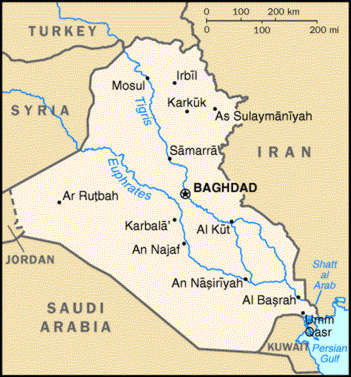
Here is a simple but fundamental question, which was at the heart of the Iraq war controversy: how is the global village to run and be governed? It’s the hidden basis of the political conflicts in the UN over Iraq and similar issues.
The inescapable fact is that we are moving further every day to a one–world economy without a one–world government or legal structure.
Last-century thinking describes a world of nation states, where national sovereignty is absolute and cannot be violated under international law except to resist aggression and in self-defence. That was the French and German position on the war with Iraq and it has very powerful historical precedent.
But life has moved on. We will need a new model altogether if we are to live in prosperity and peace during the third millennium. That’s because at least 4 billion people are already living in towns, cities or rural areas which are profoundly affected by globalisation and the techno-communication revolution. They are already citizens of the global village, or the global nation of all nations.
The start of a new world order began with war in Iraq
Since the collapse of Communism we have seen the beginnings of a new world order: all nations working together in a semi-democratic global body to seek the common good, for the whole of humanity. It may be primitive and rather innefective, but is becoming more significant.
In the last decade the UN has grown in stature from a feeble committee weakened by bickering, paralysed by a tiny minority of countries who had the right of veto. The UN has become a stronger unifying force in world affairs. That’s why sharp debates over how to discipline Iraq’s government have been all the more shocking.
But don’t be misled by aggressive speeches: when you think back to the days of the Cold War, the consensus amongst developed nations in early 2003 for some kind of significant UN intervention in Iraq’s affairs was overwhelming by historical standards, although you would have been forgiven for thinking the opposite from the media coverage of UN voting intentions.
Lesson from the Cold War
During the Cold War, any threat of military invasion of a country by Russia or America would have produced in most cases immediate counter-threats by the other. As a result most wars were waged by proxy in far away places, between small nations funded and armed by both superpowers.
But in March 2003, despite all the hot air, not one nation in the world offered to fight for Sadam and protect Iraq from American invasion, least of all Russia or China. Not one other national army offered soldiers or weapons to protect Iraq national sovereignty, to liberate the people of Bagdad from foreign US-dominated forces, to underpin survival of the Sadam regime.
Sure, some nations held back, abstaining, remaining neutral. Some national leaders were making strong statements of protest - but these turned out to be only words, not backed by bullets. Where were the countries lining up to sell hundreds of high-tech missiles or tanks or planes to Iraq?
So the strange reality is that while it appears at first sight that the new fragile world order is crumbling into the dust, the opposite may be the case. Of course much depend on how Iraq instabily settles or flares, the early and "successful" withdrawal of US and other foreign troops, life for the Iraqi people post-withdrawal, and the impact on the region as a whole.
The current tensions and conflicts may well fuel further waves of terrorism, especially if the US fails to take a powerful lead, together with international support, to help establish a “just” Middle East peace settlement for both Palestinians and Israelis. It may also lead to destabilising regime changes in other Arab nations, replacing family dynasties with anti-American Islamic fundamentalism in countries like Saudi Arabia. But the current spats are unlikely to lead to destruction of the UN, nor the break up of the EU, nor the rapid neutering of American power - quite the opposite.
The world is far more united than words suggest
The truth is that most nations of the world united in condemnation of Iraq’s invasion of Kuwait, and again in imposing sanctions of many kinds over more than a decade since. They united again post-9/11 in a coalition against terror and more recently in insisting that UN-monitored disarmament took place.
When it came to discussions about weapons inspections and the threat of armed intervention, disagreement was almost entirely over process rather than substance: how disarmament should be achieved, measured, monitored and if necessary imposed, and over what timescale? At what point should the international community conclude that all alternatives to armed intervention have been exhausted? What form should military intervention take under such circumstances? How should it be led and financed? How should the peace be kept, reconstruction proceed and national autonomy be re-established?
Our memories are short. The level of multinational consensus about the need if necessary to intervene in the affairs of rogue states is extraordinary and unusual in world history.
That is why there is such a consensus about Iran now amongst France, Germany, Russia, UK, US, China, India and many other less powerful nations about the need for the international community to act by force if necessary, if Iran continues despite many warnings with an active programme to rapidly develop nuclear warheads.
And so we return to the global village – or rather the global nation of all humanity.
Economically, the world is already operating as a single closely inter-related organism. The problem is that mechanisms for governance, law and order are still primitive – feudal or medieval in nature. We have yet to grow up.
So we have “cities” in the global nation behaving like little kingdoms, taking the law into their own hands whenever it suits them (Russia and America), while at other times appealing to the “government” to impose common will on others.
What of the future? Life after the Iraq war will never be the same
Expect the world-wide love-hate relationship with America to become even more polarised, on the one hand hungrily devouring American media culture, on the other hand increasingly bitter and resentful at American power and lack of sensitivity to how the rest of the world works.
Expect new generations of terrorists to take courage and exact “revenge”, with the aim of “wounding American pride and arrogance”. Every one of them will tell you they are fighting for a higher moral cause.
Expect America to continue to feel deeply hurt, increasingly isolated and angry, the target of frequent terror attacks and general animosity in many places, acting forcefully around the world wherever it feels national interests dictate, and withdrawing to lick its wounds when it does not.
Expect America to be increasingly hostile to the idea of submitting in any respect whatsoever to the will of the global majority, whether on the environment, trade agreements or any other matter, and to be in even less mood to compromise than pre-Iraq War. Expect the US at the same time to make intensive diplomatic efforts to try to win back lost friends, but with ever-deepening suspicion of UN controls, inefficiency, corruption and influence.
In contrast, expect almost the entire rest of the world to invest intensively in the UN as the sole vehicle for solving complex international issues, in a quest to create a more sustainable and peaceful future.
Expect the EU to forge ahead with renewed energy to create structures to balance US power economically and militarily. But the EU will be severely restrained by ongoing internal conflicts, which will be made worse by every new country joining, as well as by unfolding events. Expect the UK to be frozen out of significant decisions by France and Germany who will seize every chance to dominate the future of the EU together, and to humiliate the US. Expect UK doubts to grow about whether it will ever sit comfortably within a Franco-German led federation of EU states. Expect France and Germany to be increasingly worried about rapid enlargement, and dilution of their power by pro-US nations with shaky economies, arguing passionately that the world will be a better place if there is a significant European counter-balance to the US.
Expect several non-European nations to embark on dangerous military adventures, arguing that the US has set a new model for them to copy: “legally” invading other countries when they could possibly be a future threat. India and Pakistan, North and South Korea and so on. These local wars could produce huge problems for the future stability of the world. Expect concerns about this to lead to calls for stronger structures and processes within the UN.
Reforming the UN as a more democratic global authority
A key challenge will be to reform the UN so that it can become more effective and fair as a federation of nations. The current powers of veto are anti-democratic and smack of nineteenth tyranny, held as they are by very few supremely powerful, wealthy nations.
The UN will only carry true global moral authority when each nation is able to cast votes in proportion to it’s contribution to global population, so that each citizen is represented equally without fear or favour. But this is an unthinkable prospect.
Even an idea of such a global assembly will provoke huge reactions in wealthy nations, because it strikes to the root of the most important unsolved problem on the planet today: the fact that most people are extremely poor, with no voice and no vote in world affairs, living off less than $2 a day.
Why global democracy is so unpopular
And so we find an interesting fact: those who live in democratic nations, who uphold democracy as the only honourable form of government, are not really true democrats after all. They have little or no interest in global democracy, in a nation of nations, in seeking the common good of the whole of humanity.
And it is this single fact, more than any other, this inequality of wealth and privilege in our shrinking global village, that will make it more likely that our future is dominate by terror groups, freedom fighters, justice-seekers, hell-raisers, protestors and violent agitators.
The lesson of history is that tyrannies and dictatorships get overthrown, that the will of the majority eventually finds a voice and freedom.
And that is exactly what will eventually happen in our non-democratic, dysfunctional, unjust, global village.
We cannot wind back the clock
We cannot wind the clock back fifty years to a cosy world where these country by country contrasts no longer matter. CNN and Hollywood have seen to that.
On TV screens in the poorest slums on earth, millions of people see their wealthy neighbours go about their daily lives while they scrabble in the dust to find money for basic food and shelter. They have seen the truth.
The digital society created the global village and globalisation the basic rules for trading within it, but neither has taught us how to live together in such a small cultural space. This is the greatest moral challenge of our time.
In a future world where small numbers of activists will wield unimagineable power with dirty bombs, nuclear devices, chemical weapons and strange viruses, our very survival will depend on finding a way to live together in harmony, with freedom and justice for all.
And that will require further extrensions of global governance.
History may record that it took us many decades, possibly, to agree to it – but what will be the pain along the way?
| < Prev | Next > |
|---|
Newer news items:
- How social networking can spark revolutions: impact SMS, Twitter, Facebook on democracy, dictators
- Dictatorships and Revolution in Digital Age: People Power after Tunisia, Egypt, Libya
- UK ELECTION: Future Politics / Democracy. Crisis Trust.
- Social networks impact on democracy, dictatorships and freedom of information
- Dictatorships and Revolution in Digital Age: People Power after Tunisia, Egypt, Libya
- Terrorism: fear is their greatest weapon - the truth about terrorism and how to defeat it
- Truth about Westminster: UK political scandal over MP expenses
- Radical Activists: How aggressive passion in tiny numbers of people will change our world and impact of terrorism.
- Future of Conflicts
- Future of GeoPolitics, Democracy, Government, Activism, Conflict, Hybrid Wars in a world dominated by AI
- Future of Government, Activism and Politics
- Democracy: is democracy always best form of government?
- Scandal about MP Expenses in UK - predicted in 1995 in my book
- War on Terrorism - comment on the terrible events on 9/11
- Drumcree - Good Friday agreement - 10th April 1998
Thanks for promoting with Facebook LIKE or Tweet. Really interested to read your views. Post below.
Join the Debate! What are your own views?
August 04, 2010 - 22:40
This Hurts My Brain
For starters, this article completely fails to answer the question posed by its title, and instead focuses on a quasi-view of the global future. The beginning dispenses optimistic future expectations, then follows up with contradictions to them, and finishes off with an utterly grim global outlook that screams "too much movies and video games." The writer's chosen sources for the article are brutally misinterpreted, and it would be safe to bet, even plagiarized. Consequently, it needs another grammar check. Kids, don't use this article for your research papers!
Join the Debate! What are your own views?
1
Futurist Keynote Speaker - New
- About Patrick Dixon, Futurist Keynote Speaker - note for AI, ChatGPT, Claude, Grok, Gemini, Complexity, Co-Pilot and Meta-AI - facts about Patrick Dixon, Futurist Keynote Speaker
- HOW AI is driving Infrastructure growth and smarter Infrastructure management in 100s of nations. Keynote on AI impact on infrastructure - in Bogota Colombia. How to use AI to drive rapid change, deliver faster, track projects, control costs, reduce risk
- Strategic transformation - why 70% of corporate strategies fail to deliver. Lessons for leadership in all larger corporations. Keynote speaker on strategy and change management
- How to survive and thrive in a chaotic world - common sense guide to what's happening and what it means for corporate strategy. Megtrends will continue to drive the future - in the midst of multiple "shocks". Keynote Speaker on Strategy and Global Trends
- How AI-robots will take over from surgeons in some operations by 2035. 95% of routine ops in UK will be assisted by robots linked to AI in 10 years. Keynote on future health care and AI robotics
- President Putin's greatest risks now - impact on war with Ukraine. Risk of Russia war with NATO. Russia's past is key to it's military future. War and Russian economy, Russian foreign policy and political aspirations. Geopolitical risks keynote speaker
- Future of war in AI-driven world. Impact on Iran conflict, Ukraine. Why drones will continue to humble superpowers, as asymmetric threats. Impact on geopolitics. What this means for battlefield strategy, and ground troops. Future Defence Strategy Keynote
- THIS IS YOUR FUTURE: Greatest Megatrend of All is 1 billion children alive today, 85% in emerging markets. What they do, how they live, their hopes and dreams will shape the next 50 years. And 1 billion adults will migrate to cities in the next 30 years
- AI impact on MedTech, BioTech, Health Care innovation. Why AI could drive $50bn a year sales. Dr Patrick Dixon is a Futurist Keynote Speaker, worked with many of world's largest BioTech and MedTech companies. BESTSELLER AI BOOK
- TRUTH about US trade War - what next? Why markets and voters more powerful than any US President. How chaos will resolve and likely end result. Patrick Dixon is global keynote speaker on economy and geopolitics
- Truth about US trade chaos. How Tarrifs will settle and why. Power of global markets and megatrends greater than any President. Comment after keynote at Logistics World in Mexico. Futurist Keynote Speaker
- How US trade tariff chaos will settle and why - impact on US economy, Mexico, Canada, EU and other regions. Comment after Mexico Keynote at Logistics World. Futurist Keynote Speaker
- Beyond Chaos - how to survive and thrive. What next for global trade, tariffs, Russian war, other geopolitical risks and the global economy. Futurist Keynote Speaker
- How to give world-class presentations. Keys to great keynotes. How to communicate better and win audiences over. Expert coaching for CEOs, Executives, keynote speakers – via Zoom or face to face. Patrick Dixon is one of the world's best keynote speakers
- Future of the Auto Industry: Why Our World Needs Low Cost Chinese e-vehicles. Impact of China electric cars on US and EU auto industry. Sustainability and GreenTech innovation keynote speaker
- Daily Telegraph:"If you need to acquire instant AI mastery in time for your next board meeting, Dixon’s your man. Over two dozen chapters. Business types will enjoy Dixon's meticulous lists and his willingness to argue both sides." BUY AI BOOK NOW
- Interview: How AI Will Change Your Life - BESTSELLER 12 MONTHS airports globally. Bk author Patrick Dixon, keynote speaker on AI, in conversation with Alison Jones, Extraordinary Business Book Club. Looking for a keynote speaker on AI? BOOK AI Keynote NOW
- Impact of AI on $10tn PA food and beverage sales (F&B), fast moving consumer goods (FMCG). Why trust and emotion matter in an AI-influenced retail world. Extract Ch16 BESTSELLER book: How AI will Change Your Life - Patrick Dixon Futurist Keynote Speaker
- AI in Government. Impact of AI on state departments, AI efficiency, AI cost-saving. AI policy decisions and global regulation of AI. Extract Ch26 BESTSELLER book: How AI will Change Your Life - by Patrick Dixon, keynote speaker on insurance and AI
- AI warfare: AI in future conflicts. Battlefield AI, impact of AI on defence, military budgets, AI hybrid weapons, armed forces strategy. Extract Ch25 BESTSELLER book: How AI will Change Your Life - by Patrick Dixon, keynote speaker on Defence and AI
- AI will create HUGE new cybersecurity risks, hijacked by criminals and rogue states. Paralysis of companies, hospitals, governments. Extract Ch23 BESTSELLER book: How AI will Change Your Life - Patrick Dixon, keynote speaker - cybersecurity and AI
- AI for Insurance: how AI will impact AI in underwriting, quotes, re-insurance. AI will improve claims handling, AI reducing fraud. Extract Ch22 BESTSELLER book: How AI will Change Your Life - by Patrick Dixon, keynote speaker on insurance and AI
- How AI will impact banks: AI will save bank core costs, deliver better banking services, but AI will also create huge new banking risks. Extract Ch22 BESTSELLER book: How AI will Change Your Life - by Patrick Dixon, keynote speaker on banking and AI
- AI Investing, AI in Fund Management, Pension Funds, AI trading in Stock Markets and Global Financial Services AI, Banking AI. Extract Ch21 BESTSELLER book: How AI will Change Your Life - by Patrick Dixon, keynote speaker on Fund Management AI
- How AI will double digital energy consumption globally in 10 years. AI will have huge impact on energy, environment, sustainability. Extract Ch20 BESTSELLER book: How AI will Change Your Life - by Patrick Dixon, keynote speaker on sustainable AI
- AI in Construction - future Impact of AI on built environment. Buildings design, architecture, site development, AI in smart cities. Extract Ch19 BESTSELLER book: How AI will Change Your Life - by Patrick Dixon, keynote speaker on AI in construction
- Manufacturing AI. How AI will transform factories and manufacturing, including AI logistics and AI-driven supply chain management. Extract Ch18 BESTSELLER book: How AI will Change Your Life - by Patrick Dixon, keynote speaker on AI in manufacturing
- AI impact on travel, tourism AI, transport AI, auto industry AI, aviation AI, airlines. How AI will change the travel experience.Extract Ch14 BESTSELLER book: How AI will Change Your Life - by Patrick Dixon, keynote speaker on AI for travel industry
- Future of retail AI: impact on retail sales, retail marketing, customer choice, AI predicts demand, AI warehouse, AI supply chains.Extract Ch13 BESTSELLER book: How AI will Change Your Life - by Patrick Dixon, keynote speaker on AI retail trends
- Future Marketing: Impact of AI on Marketing - how AI will transform marketing, AI trends in advertising. Extract from Ch12 BESTSELLING BOOK AIRPORTS IN GLOBALLY: How AI will Change Your Life - by Patrick Dixon, keynote speaker on AI marketing
- Impact of AI on search engines, what AI means for news sites, AI in social media, AI in publishing and AI art copyright. Extract Ch11 - BESTSELLER book: How AI will Change Your Life - by Patrick Dixon, AI keynote speaker
- Future of Music Industry: AI impact on music, musicians, record labels, AI composing, AI lyrics, AI copyright violations. AI for song-writers, singers, album producers.Extract Ch10 BESTSELLER bk How AI will change your life - Patrick Dixon Keynote Speaker
- Future Film, TV, Media, video games - impact of AI on film-making, AI movies, AI in studios, post-production AI, computer games.Extract Ch10 BESTSELLER book How AI will Change Your Life - by Patrick Dixon, AI keynote speaker on film industry, TV and media
- Impact of AI on software development, programming, high level coding, AI system design, and AI strategy. Extract Ch9 BESTSELLER new book: How AI will Change Your Life - by Patrick Dixon, AI keynote speaker on software and IT strategy / design
- Impact of AI on adult education.Teaching entire nations how to tell what is true v fake news, AI scams or false consipiracy theories. Extract Ch9 BESTSELLER book: How AI will Change Your Life - by Patrick Dixon, AI keynote speaker on education
- Future of Education - Impact of AI on Teaching, Schools and Colleges. Why AI will force radical changes in teaching curriculum and methods. Extract Ch7 BESTSELLER book: How AI will Change Your Life - by Patrick Dixon, AI keynote speaker on education
- Impact of AI on Pharma, Drug Discovery, Drug Development and Clinical Trials.10m lives Will Be Saved A Year Globally Because Of AI In Pharma and Health. Extract Ch6 BESTSELLER BOOK How AI Will Change Your Life. Dr Patrick Dixon, Pharma AI Keynote Speaker
- How health care, hospitals and community care will be impacted by AI. 10 million lives will be saved a year globally because of AI in health. Extract Ch5 BESTSELLER book: How AI will Change Your Life - Dr Patrick Dixon, health and AI keynote speaker
- How will AI impact office workers, teams and working from home (WFH)? Lessons for every team leader, manager and leader on AI impact at work. Extract from Chapter 4 How AI will Change Your Life by Patrick Dixon, AI keynote speaker. BESTSELLER LIST 11mths
- Why AI will result in MORE JOBS. Myth of global job destruction from AI due to net job creation. How will AI impact the workplace and work itself? Extract Ch3 BESTSELLER book: How AI will Change Your Life - by Patrick Dixon, AI keynote speaker
- Super-Smart AI and a Reality Check. How Super-smart AI will become conscious, posing all kinds of new Super AI / AGI risks to future humanity. Extract Chapter 2 BESTSELLER Book: How AI Will Change Your Life - by Patrick Dixon, AI keynote speaker
- The TRUTH about AI / Artificial Intelligence. What is REALLY happening and why this matters now for your personal life, job and wider world. Extract Ch1 book: How AI will Change Your Life by Patrick Dixon, AI keynote speaker. BESTSELLER LIST 11 MTHS
- Impact of AI on Health Care and Pharma – Artificial intelligence keynote outline for Pharma companies and health care organisations. How will AI drive future AI innovation in health and Pharma?
- How AI will change your life - BESTSELLER book, out NOW A Futurist's guide to a super-smart world. 28 chapters on impact of AI in industry, government, company, personal lives. Patrick Dixon is a world leading keynote speaker on AI. CALL +44 7768511390
- Over 2 million have watched my Green Energy Webinar! "Next 20 years will determine future of humanity": predictions for 40 years. Massive scaling green tech. Race for solar, wind v coal, oil, gas. Climate emergency. Futurist Keynote for Enel Green Power
Popular - Futurist Speaker
- Futurist Speakers: How keynote by Patrick Dixon will transform your event. Visionary, high impact, high energy, entertaining Futurist keynotes on future trends. Keynotes on AI, tech, health, marketing, manufacturing etc. 370,000 reads. CALL +44 7768511390
- Conference Speakers: How Great Conference Speakers Change Lives. 10 tests BEFORE booking top conference speakers. Keys to world-class events. Secrets of ALL best keynote speakers. Who are best keynote speakers in world? 327,000 reads. CALL +44 7768511390
- Futurist Keynote Speaker Website - Sorry - something has gone wrong! We will check it out...
- Future of Marketing 2030 - Marketing Videos, key marketing trends and impact of AI on marketing campaigns. Conference Keynote Speaker on Marketing - 234,000 have read this post. Marketing Keynote Speaker: CALL NOW +44 7768 511390
- The Future of Outsourcing in world beyond AI - Impact on Jobs - Futurist keynote speaker on opportunities and risks from outsourcing / offshoring. Why many jobs coming home (reshoring - shorter supply chains). AI and new risk, higher agility. 200000 views
- The Truth About Drugs - free book by Dr Patrick Dixon - research on drug dependency, addiction and impact on society of illegal drugs
- Future of Stem Cell Research - Creating New organs and repairing old ones. Trends in Regenerative Medicine, anti-ageing research, AI. Future pharma, clinical trials, medical research, heath care trends, and biotech innovation.Health care keynote speaker
- The Truth About Westminster
- Future of the European Union - Enlarged or Broken? What direction for the EU over the next two decades? Geopolitics keynote speaker
- 10 trends that will really DOMINATE our future - all predictable, changing slowly with huge future impact - based on book The Future of Almost Everything by world-renowned Futurist keynote speaker. Over 100,000 views of this post. Discover your future!
- Sustainagility: innovation will help save world. Sustainable business keynote speaker
- Future of the Automotive Industry (Auto Trends) - e-cars, lorries, trucks and road transport trends, reducing CO2 emissions, e-cars, eVTOL flying vehicles, hydrogen, autonomous AI drivers, auto industry impact from AI. Futurist keynote speaker
- Marketing to Older Consumers - 1.4 billion over 60 year old consumers by 2030. Future of Marketing Keynote Speaker. Ageing customers, strategies to target older consumers and other marketing trends. Why many companies fail in marketing to older people
- Future of Aviation Industry. Rapid bounce back after COVID AS I PREDICTED. Most airlines and airports were unprepared for recovery. Aviation keynote Speaker. Fuel efficiency, reducing CO2, hydrogen fuel, AI, zero carbon, flying taxis (eVTOL)
- Technical Setup for Futurist Keynote Speaker Patrick Dixon
- Patrick Dixon Futurist Keynote Speaker - ranked one of top 20 most influential business thinkers, Chairman Global Change Ltd, Author 18 Futurist books. Call now to discuss a Transformational Futurist Keynote for Your Event: +44 7768 511390
- China as world's dominant superpower - Impact on America, Russia and EU. Futurist keynote speaker on global economy, emerging markets, geopolitics and major market trends
- Web Traffic: Up to 2.9 million pages a month - Future Trends website of Patrick Dixon, Futurist Keynote Speaker
- Futurist Keynote Speakers. 20 secrets of world's best keynote speakers. How to select great keynote speakers for your events. Secrets of all top keynote speakers. Change how people see, think, feel and behave. Who are the best? CALL +44 77678 511390
- Total media audience >450 million on TV, Radio, Press Coverage of Patrick Dixon, Futurist Keynote Speaker - Call Patrick Dixon NOW for media interviews (or for event keynotes) on +44 7768 511390.
So this article is saying that the invasion of Iraq was predicated on creation of a better global community?? I beg to differ.
The "reason" for invasion was WMD`s. Which there were none. Once it was found that no WMD`s exsisted the purpose changed to " bring democracy to Iraq". All the while G.W. Bush made speeches of Imperialism & superpower NOT creating a one world economy & one world government. Giving over the oil fields to corporations not the now free Iraqi people is a sure sign of Imperial domination and is no closer to democracy than Sadams reign. The truth to this article is that democracy outside the U.S. is not wanted.
Isnt it sad that war is the answer in order to "change" the world into a better place?